
Teaching Power: What Schools Teach About Authority and Democracy
Our country has reached an inflection point. Core institutions are being tested on a simple but unforgiving question: do they exist to cultivate democracy and human dignity, or to enforce authority and control?
That tension shows up in our schools in tangible ways. Long before students encounter a civics lesson, they experience how power works. They learn whether their ideas matter, whether disagreement is tolerated, and whether authority explains itself or simply asserts itself. Those daily experiences shape young people far more than any single course ever could.
That is why, especially now, school leaders must be explicit about the kind of experience their schools create—not just what they teach, but how power is exercised and whose voices count.
Authoritarian schooling
An authoritarian school is organized around control rather than trust. It treats order as the primary virtue and obedience as the primary outcome. Authority flows downward and is enforced through rules and surveillance rather than earned through relationship and respect.
Learning is narrowed to what can be standardized and monitored, while curiosity, interpretation, and dissent are treated as problems to manage.
Such schools often appear efficient and orderly. But they achieve that order through suppression—flattening complexity and teaching students a quiet lesson about power: that it does not listen, explain itself, or belong to them.
The authoritarian temptation in education
Any school leader who does not feel the pull of authoritarianism today is sleepwalking.
Authoritarianism in education rarely announces itself with banners or slogans. More often, it arrives disguised as common sense: standardize, simplify, control. Reduce disagreement in the name of order. Replace deliberation with directives. Treat interpretation as inefficiency.
These moves are typically justified as pragmatism—the claim that leaders are simply trying to “get things done.” But when efficiency replaces listening and control substitutes for leadership, institutions sever their relationship with the people they serve. What remains may be orderly, but it is no longer legitimate.
Schools are especially vulnerable to this dynamic. They are complex organizations involving hundreds or thousands of people, and because they serve children—whom we love most—they are emotionally charged institutions. Fear narrows judgment and creates demand for simple, technical answers to deeply human and emergent problems.
In those moments, tightening authority can feel responsible in the short term. But systems of control, once installed, do not remain temporary. They become the institution—and the student experience itself.
Human-centered education
Human-centered education offers a different path—not by rejecting structure or expectations, but by redefining where rigor lives.
In human-centered schools, seriousness is not abandoned; it is redirected. Academic expectations remain high, but they are grounded in meaning and purpose rather than fear. Students are asked to do real intellectual work: to analyze, interpret, create, defend ideas, revise their thinking, and apply knowledge in contexts that matter.
Structure still exists. Schedules, curriculum, and professional expertise matter—even more so. But structure primarily serves learning rather than control, and expertise invites engagement rather than demands deference. Authority is present and visible, yet it operates differently. It explains itself, listens, and expects responsibility instead of obedience.
Human-centered systems expand learning to include judgment, creativity, and interpretation. They treat disagreement as evidence that thinking is happening and ideas are being tested. Conflict becomes evidence that students are engaging with matters of importance and meaning; it is guided, examined, and resolved through reason and dialogue.
These schools are not chaotic. They are intentional. Expectations are clear. Boundaries are real. But within those boundaries, students are expected to co-author their learning rather than consume it passively. They learn to manage complexity because complexity is not removed from their experience.
Human-centered education resists the illusion that efficiency is the highest good. It recognizes that some of the most important outcomes of schooling—judgment, empathy, responsibility, and civic capacity—take time to develop and are diminished when rushed. The work may look slower on the surface, but it produces something authoritarian systems cannot: people capable of dignity, deliberation, and self-governance.
This kind of schooling develops people who are harder to control because they think for themselves. That is precisely the point, if we are serious about preparing young people to engage as citizens in a democratic republic.
What educators can do now
Human-centered schooling does not require new laws, more funding, or meaningless slogans. It requires clarity of purpose and intentional design. School leaders and educators can begin by asking different questions—and, more importantly, acting on them.
Do our learning experiences require interpretation, creativity, and judgment?
In human-centered schools, students are routinely asked to make sense of ambiguity rather than follow scripts. This shows up in assignments that require interpretation, original expression, and choice. Students must decide what matters, defend why it matters, engage critique, and revise their thinking. Getting the facts right is necessary, but not sufficient; meaning and reasoning become central.
What real cognitive work are students doing in the tasks we assign?
Too often, students complete work that has already been cognitively solved by adults. Human-centered classrooms reverse that pattern. Students frame questions, weigh evidence, construct arguments, test ideas, and revise conclusions. Instructional quality is judged not by how clearly content is delivered, but by how deeply students are required to think, sustain that thinking, and evolve their understanding to solve meaningful problems.
Where do students exercise real voice, not simulated choice?
Real voice exists when student perspectives shape outcomes, not just conversations. This can include students helping design learning experiences, participating meaningfully in site-level decisions, or engaging in institutional governance that affects their daily lives. When student input is visibly reflected in final decisions, participation becomes consequential rather than performative.
Who participates in decisions, and who is merely informed afterward?
Authoritarian systems announce decisions after they are already made. Participation, if it exists at all, is performative and designed to manufacture legitimacy. Human-centered systems work differently. They invite participation before decisions are finalized, when perspectives can still shape outcomes rather than merely react to them.
This does not mean every issue is open for debate or that leadership abdicates responsibility. It does mean leaders are explicit about constraints: what factors are fixed, what is negotiable, and why. Hard decisions still occur. The difference is that they are made in the open, with awareness of their impact and accountability to those affected.
How can decision-making be shared in ways that strengthen legitimacy rather than erode it?
Legitimacy and trust are not created by speed or control. They are earned through explanation, transparency, and a demonstrated record of sound judgment. In human-centered schools, authority remains clear but operates differently. Leaders explain how decisions are reached, listen seriously to dissent, and remain accountable for outcomes.
These processes may move more slowly, but they produce something authoritarian systems cannot: durable legitimacy grounded in shared responsibility rather than compliance.
What the arts do that control cannot
No part of schooling exposes the difference between human-centered and authoritarian systems more clearly than student experiences in the visual and performing arts.
Authoritarian schools may allow the arts to exist, but only in constrained form. Technical skill is emphasized over originality. Replication is valued over provocation. Artistic work is sanitized and managed to reinforce approved narratives rather than interrogate them. In these contexts, art is tolerated only so long as it does not challenge authority or expand the range of perspectives students are permitted to explore.
Genuine human art operates differently. It is interpretive by nature. It is aesthetic, embodied, and felt. It legitimizes multiple perspectives and insists on originality. It asks students not only what is correct, but what is meaningful, what is just, and what is worth saying out loud. In doing so, it creates space for critique of ideas, assumptions, and power itself.
Original and critical voices have always made authoritarian systems uneasy. They respond by limiting, diminishing, and coercing expression. But genuine art cannot be fully standardized, surveilled, or controlled without losing the very qualities that make it meaningful. Artistic work resists scripts. It refuses singular truths. It invites students to see themselves as artists rather than recipients, and as creators rather than consumers.
When schools marginalize or diminish the arts, they are not making a neutral scheduling or budget decision. They are narrowing the range of human expression students are allowed to inhabit. When schools center the arts, they affirm something more fundamental: that education is not only about performance and efficiency, but about connection, dignity, and the human spirit.
The responsibility schools cannot avoid
Authoritarianism thrives where people stop expecting to be heard. Human-centered schools do the opposite. They cultivate the expectation that voice matters, that meaning can and should be contested, and that authority must earn legitimacy. In doing so, they teach students something subtle but enduring about power: that it can be challenged, explained, and shared.
Much of education is future-oriented—we work now for outcomes we hope will emerge later. But the conditions that normalize authoritarianism are already present. Students experience them daily: when voices are excluded, when power is exercised without accountability, and when questioning authority is discouraged rather than expected.
In a moment when democratic norms feel fragile, schools cannot afford to be neutral bystanders. They are among the first public institutions where young people experience authority, participation, and belonging. What students learn there—not just academically, but experientially—will shape what they come to expect from power everywhere else.
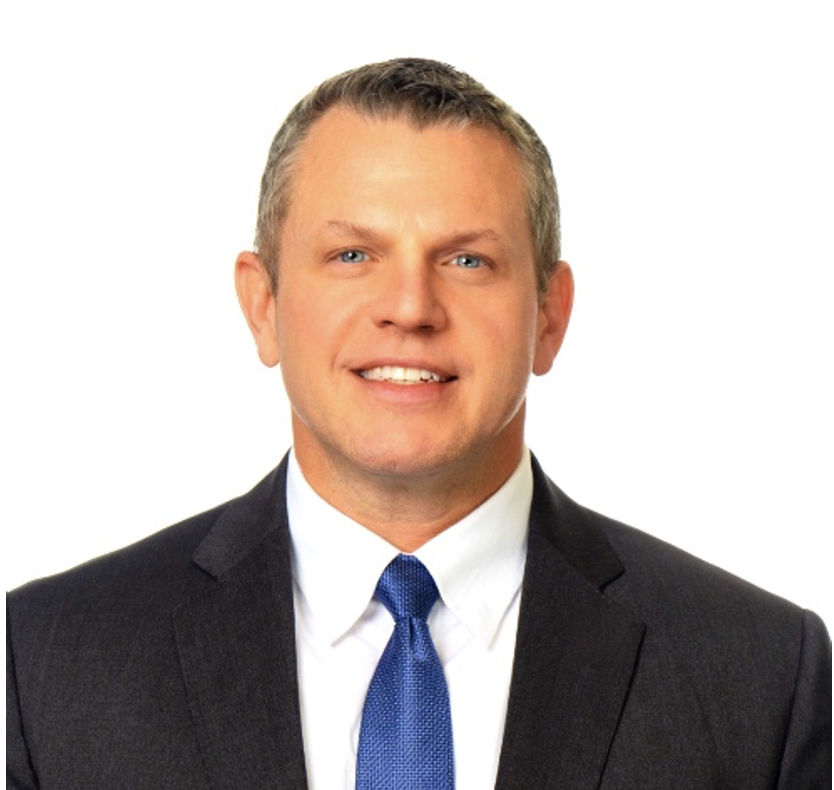
Jason E. Glass, Ed.D. is a public-school superintendent and former state education chief whose writing spans national education media, practitioner publications, and scholarly journals. He has led complex education systems at both the district and state levels and works to advance deeper-learning approaches to schooling, governance, and institutional trust. His work examines how school design and leadership shape students’ learning experiences, community engagement, and democratic life. He lives in Laguna Beach, California, with his family.
Follow Jason on LinkedIn.